Blog

  • The “Triple Play” Deal: 3 Ways to Profit from One Property – Video

    The “Triple Play” Deal: 3 Ways to Profit from One Property – Video

    Every once in a while, a deal comes along that gives you more than one way to win.

    Not every deal… but when it happens, it can be powerful.

    In this short video, I walk through a real example of what we call a “Triple Play” deal — and why this type of opportunity is something every investor should be looking for.


    🎯 What Is a “Triple Play” Deal?

    It starts with two things coming together:

    👉 A motivated seller
    👉 A property that needs work

    In this case, we’re talking about a typical DC-area rambler — nothing fancy — but:

    • Estate sale
    • Vacant for years
    • Significant cleanout and renovation needed

    This is exactly the type of property that creates opportunity.


    💡 Why This Deal Is Different

    What makes this deal powerful isn’t just the purchase…

    It’s the options it creates.

    Inside the video, I break down how a deal like this can give you multiple paths to profit, instead of being locked into just one exit.

    That flexibility is what separates:

    • Average investors
      from
    • Investors who consistently win

    🧠 The Big Lesson

    Most investors look at a deal and ask:

    👉 “Will this flip work?”

    Better investors ask:

    👉 “How many ways can I win on this deal?”

    That shift in thinking is everything — especially in today’s market where margins are tighter and mistakes are more expensive.


    ▶️ Watch the Full Breakdown

    I walk through the actual property and explain exactly how this “Triple Play” works in the real world.

    👉 Watch the video here:


    🔔 Stay Connected with Washington REIA Network

    If you want more real-world deal breakdowns like this — especially here in the DC/DMV market — stay plugged in with Washington REIA Network.

    We focus on:

    • Real deals
    • Real strategies
    • Real opportunities

    👉 Make sure to subscribe and follow along.

  • What Makes a Profitable Rental Property in 2026?

    What Makes a Profitable Rental Property in 2026?

    I recently came across an article from Norada Real Estate Investments titled Best Cities to Buy a House for Investment in 2026.

    Before I comment on that, I want to start with one of my core beliefs:

    Wealth in real estate is created by holding property long-term for cash flow and appreciation.

    Wholesaling and fix-and-flip deals are excellent for generating income. But if your goal is true wealth, it’s built over time by owning and holding rental properties.


    National Lists vs. Local Investing

    We all see those “Top 10 Cities to Invest In” lists popping up constantly.

    And while there’s value in them, there’s also a reality check:

    Owning one property in Rochester, NY and another in Indianapolis, IN might look good on paper — but managing a scattered portfolio can become difficult fast.

    Personally, I still believe:

    You can build significant wealth right here in your local market.

    That said, if you have:

    • Family connections
    • Strong boots-on-the-ground relationships
    • Trusted partners

    …in another market, it may absolutely be worth exploring.


    Affordability Drives Cash Flow

    This is one of the biggest takeaways for 2026.

    If you want cash flow, you need to focus on affordable sub-markets.

    In the DC/DMV area, that typically means:

    • Outer suburbs
    • Secondary markets
    • Areas slightly further from major job hubs

    Closer to Washington, DC:

    • Prices are higher
    • Cash flow is tighter (or nonexistent)
    • The play becomes long-term appreciation

    Further out:

    • Lower purchase prices
    • Better rent-to-price ratios
    • Stronger monthly cash flow potential

    Lower purchase price = better chance at positive cash flow


    The #1 Metric: Rent-to-Price Ratio

    If you focus on one number, make it this.

    A strong rental typically falls in the range of:

    👉 0.7% – 1% rent-to-price ratio

    Example:

    • $300,000 property
    • $2,100 – $3,000/month rent

    That’s where deals start to make sense — even in a higher interest rate environment.

    You can still find these opportunities locally if you:

    • Buy properties that need work
    • Target the right sub-markets
    • Stay disciplined on your numbers

    Population & Job Growth Still Matter

    Even in 2026, fundamentals haven’t changed.

    You want to invest in areas where:

    • People are moving
    • Jobs are growing
    • The economy is expanding

    The DMV area still benefits from:

    • Strong employment base
    • Government stability
    • Increasing diversification beyond government jobs

    A more diversified economy = stronger long-term demand for rentals


    Landlord-Friendly Regulations (Know Your Market)

    This is one area where our local market can be more challenging.

    Some of the “top markets” you see online are in states that are:

    • More landlord-friendly
    • Faster with evictions
    • Less restrictive overall

    Here in Maryland and the DC region:

    • Regulations can be tighter
    • Timelines can be longer

    So what’s the solution?

    👉 Tenant screening becomes critical

    Your best protection is:

    • Thorough background checks
    • Strong income verification
    • Clear expectations upfront

    Final Thoughts: The Path to Long-Term Wealth

    As you shift your focus toward long-term holds, keep these principles front and center:

    • Buy in affordable areas
    • Focus on rent-to-price ratio
    • Look for population and job growth
    • Be smart about tenant selection

    If you apply these fundamentals consistently, you’re not just buying properties…

    You’re building a portfolio designed for long-term wealth.

  • From Price Cuts to Sluggish Demand: What the 2026 Builder Forecast Tells Investors

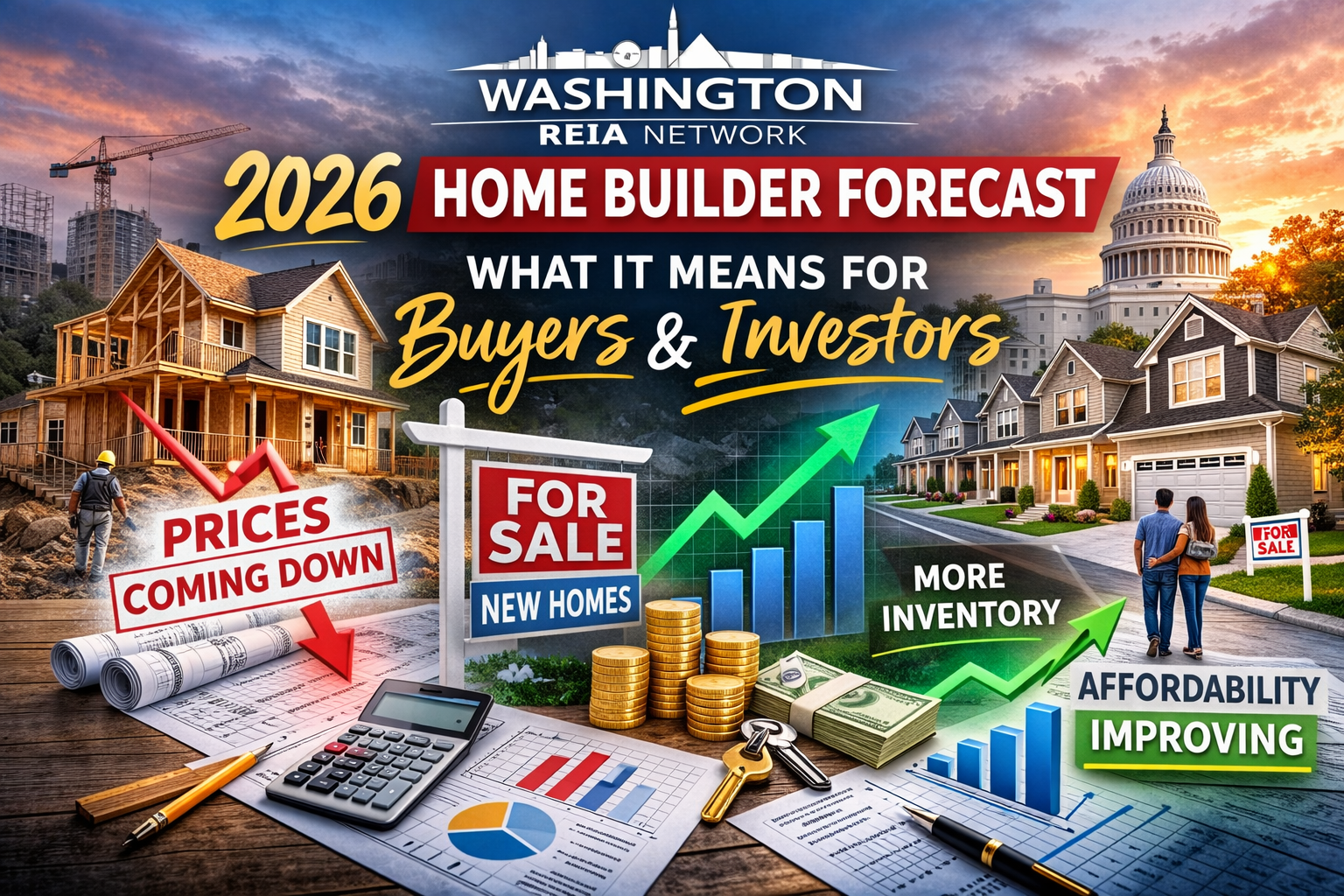
    From Price Cuts to Sluggish Demand: What the 2026 Builder Forecast Tells Investors

    I saw this article today and thought some of you might be interested.  Let me know your thoughts? You can call, text or email anytime. I would love to hear from you.

    John Peterson

    301-943-5535

    ProfitableProperty@gmail.com

    At the recent International Builders’ Show, economists from the National Association of Home Builders projected a housing market transition in 2026 from extreme seller advantage toward a more balanced environment.

    New construction prices have already declined from peak levels, with builders offering incentives and reductions to move inventory. This increased competition is expected to pressure resale pricing in many markets, according to reporting by Realtor.com.

    Inventory is slowly rising as homeowners who were “rate-locked” begin to list properties, creating more choices for buyers and more room for negotiation. However, affordability remains a major constraint due to elevated prices and mortgage rates. Rather than a crash, economists anticipate modest price softness and slower appreciation.

    For investors in the Washington, DC metro area, this suggests a window where acquisition opportunities may improve while exit margins tighten. Strong job growth, government stability, and chronic housing undersupply should continue to support rents and long-term demand.

    Key Takeaways — Fix & Flip Investors

    Opportunities

    • More motivated sellers and price reductions
    • Less bidding-war competition than 2021–2023
    • Ability to negotiate concessions and terms

    Risks

    • Softer resale prices may compress profit margins
    • Longer days on market for renovated homes
    • Buyers highly sensitive to monthly payment

    Strategy Tip: Buy deeper discounts, control rehab costs, and underwrite conservative ARVs.

    Key Takeaways — Buy & Hold / Cash-Flow Investors

    Positives

    • Persistent rental demand in a high-cost region
    • Many households priced out of homeownership
    • Strong employment base (government, defense, tech, healthcare)

    Watch Items

    • Property taxes, insurance, and maintenance inflation
    • Local rent regulations in some jurisdictions
    • Financing costs still elevated


    Strategy Tip: Focus on durable cash flow today rather than appreciation assumptions.

    The broader takeaway for investors is this: the housing market is not collapsing — it is recalibrating. Builders adjusting pricing, resale homes facing pressure, and affordability constraints all point to a market searching for equilibrium after an extraordinary run-up.

    For investors, this creates both caution and opportunity. Pricing discipline, careful underwriting, and close attention to local supply trends will matter more than ever. Those who stay informed and flexible will be best positioned to capitalize on shifting conditions as 2026 unfolds.

    John Peterson

    301-943-5535

    ProfitableProperty@gmail.com

  • 2026 – Welcome Back — Washington REIA Network

    Welcome back to the Washington REIA Network!

    If you’re returning to our community — whether you’ve been away for a bit or this is your first visit since we paused — we’re glad you’re here. In this video, we share an update on where the network is headed, what you can expect in the coming months, and how you can stay connected and engaged with other investors in the DMV.

    Watch the video below to hear the message directly:

    Enjoy!

    John Peterson

    301-943-5535

  • Rent Now–Pay Later: Innovation or Future Rent Pressure?

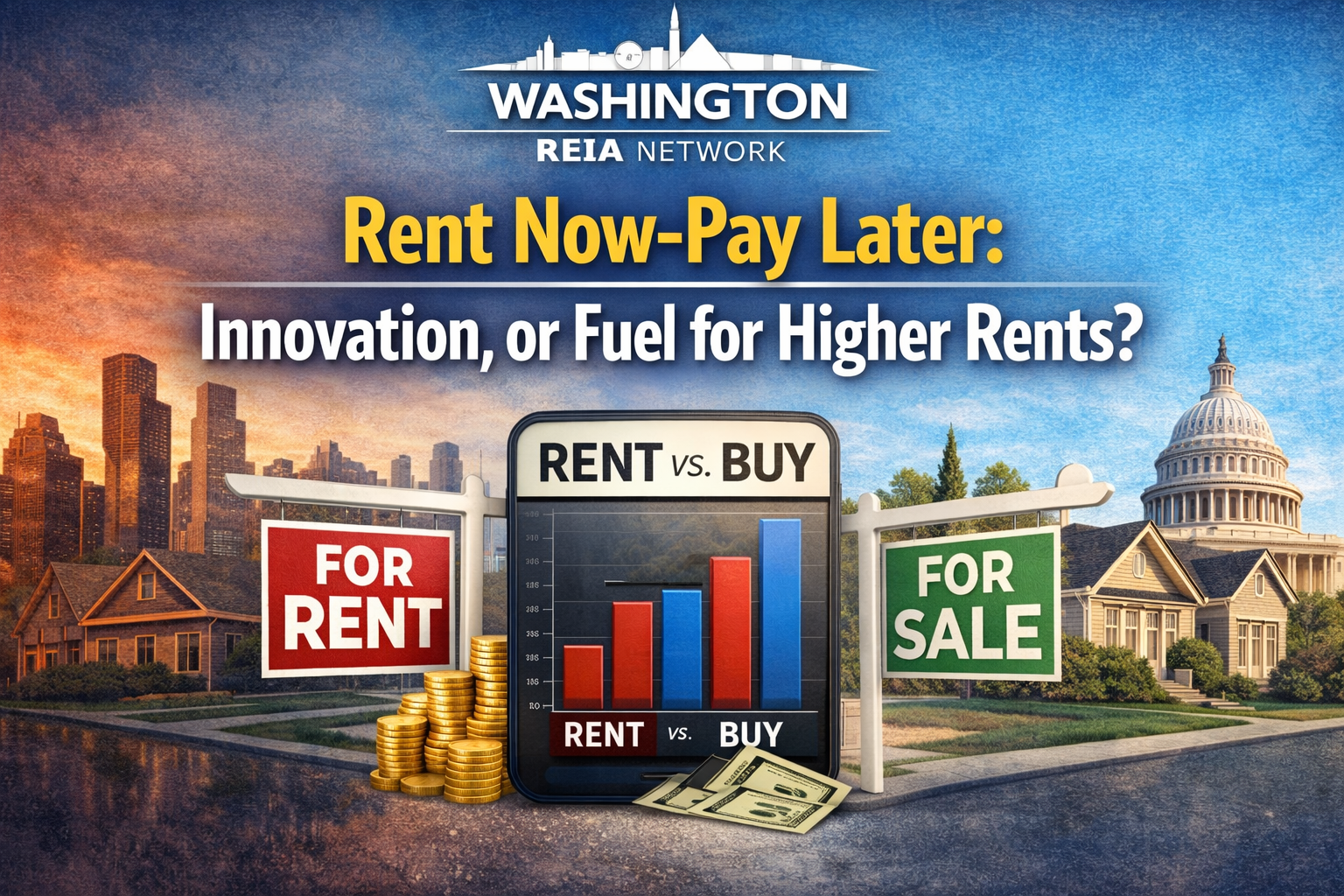
    Rent Now–Pay Later: Innovation or Future Rent Pressure?


    We recently shared an Entrepreneur magazine article highlighting a new concept being offered to tenants: “Rent Now–Pay Later.”

    While innovation in housing finance is worth paying attention to, it raises an important question for investors—does this ease affordability, or does it ultimately contribute to higher rents over time?

    That question led me to look at a broader issue: Where is renting still more affordable than buying—and where is the gap widening?

    Renting vs. Buying: The Big Picture
    Recent data shows a major structural shift in U.S. housing economics:

    • Renting is now cheaper than buying in virtually every major U.S. metro
    • Bankrate reports that owning costs 36–57% more per month than renting across the 50 largest metros
    • By 2025, every major metro flipped to rent-favoring, reversing the trend from 2021 when ownership often penciled better

    Investor takeaway: This isn’t a short-term cycle—it signals structurally higher rental demand, especially from first-time renters and mobile households.

    Markets with the Strongest Rent-vs-Buy Advantage

    These cities show the largest monthly cost advantage for renters, keeping many households in the rental pool longer:

    • San Francisco, CA – Ownership costs can exceed rent by more than 2×
    • Los Angeles / Southern California – Significant premium to buy
    • Seattle, WA – High acquisition and mortgage costs
    • Austin, TX – Renting often ~30% cheaper than buying
    • Phoenix, AZ – Renting materially undercuts ownership

    What this means: High-cost coastal and fast-growth Sun Belt markets may continue to see strong rental demand and rent resilience, even if for-sale activity slows.

    Markets Where Rent vs. Buy Is Closer to Equilibrium

    These metros still favor renting, but the gap is much narrower:

    • Detroit–Warren, MI
    • Pittsburgh, PA
    • Philadelphia Metro
    • Cleveland, OH & Buffalo, NY


    Investor insight: These markets may offer better long-term appreciation potential while still maintaining a stable rental base.

    What This Means for Real Estate Investor

    1. Sustained Rental Demand
      Large rent-vs-own gaps give tenants strong incentives to remain renters, supporting occupancy.
    2. Delayed Homeownership
      Higher buying costs push would-be buyers to stay in rentals longer, reducing turnover.
    3. Value-Oriented Market Opportunities
      Markets where the math is tight may present attractive rent growth plus appreciation scenarios.
    4. Strategy Implications
      Multifamily and build-to-rent may outperform where buying is prohibitive
      Flexible payment models and rent-to-own concepts could gain traction—but may also apply upward pressure on rents over time

    John Peterson

    301-943-5535

  • “Buy Now, Pay Later” Comes to Rent: What DC-Area Investors Need to Know

    “Buy Now, Pay Later” Comes to Rent: What DC-Area Investors Need to Know

    I thought this article in Entrepreneur Magazine this month was fascinating and very relevant to what many of us are seeing on the ground.

    As most of you know from firsthand experience, renting an apartment or single-family home has become increasingly expensive across much of the country. What caught my attention, however, was something I had never seen applied to housing before.

    The article discusses companies that pay a tenant’s rent upfront and then allow the tenant to repay that rent in installments over the course of the month. We’re all familiar with “layaway” in retail and the now-common Buy Now, Pay Later model used in consumer goods, autos, and online shopping — but this is the first time I’ve seen that concept applied directly to residential rent.

    And this is not a mom-and-pop operation. According to the article, this has already become a multi-billion-dollar industry, which tells us this isn’t a fringe idea — it’s responding to a real market need.

    So why is this gaining traction?

    The bottom line is simple: rents continue to rise, and many tenants — especially those with uneven paychecks or lower incomes — are looking for ways to manage cash flow without missing payments. I don’t see this pressure easing anytime soon.

    From an investor and landlord perspective, there are clear pros and cons to be aware of.

    On the risk side, there is concern that tenants may be rolling over rent obligations, which could lead to higher turnover or increased eviction risk if their financial situation deteriorates. As owners, it becomes more important than ever to understand the source of funds, how rent is being paid, and whether a third-party service is involved. Some real estate professionals also warn that these payment structures could ultimately support higher rents, making affordability even more challenging over time.

    On the opportunity side, these services may expand the pool of qualified tenants, particularly in markets where affordability is stretched but demand remains strong. For some operators, thoughtfully allowing or even partnering with these platforms could improve occupancy while maintaining on-time rent collection — if properly underwritten.

    The key takeaway: pay close attention to how rent is being paid, stay informed about these emerging payment models, and consider whether they represent a risk, an opportunity, or both within your own portfolio.

    This is one more signal that affordability pressures are reshaping the rental landscape, and as investors, we should be watching these trends closely.

    John Peterson

    301-943-5535

  • May WREIA – Seven Ways to Make Money In Real Estate – (Video Invitation)

    May WREIA – Seven Ways to Make Money In Real Estate – (Video Invitation)

    In your day to day life you are probably walking right past opportunity because you are too laser focused on finding your next deal, or client, or project.

    This Monday at WREIA let’s just call it “Making Money Monday”. I want to share 7 ways you could be making money in real estate.

    Whether you are part time or full time.

    Whether you are an agent or an investor.

    Whether you are brand new or an old grizzled veteran.

    Opportunity is out there.

    Let’s take your existing skills and knowledge and convert it into extra profits for your business.

    This Monday at WREIA let’s talk about making some extra income, right here in the DC area.

    Please join me on Monday for the May WREIA meeting?

    Grab a virtual reservation while you can and I will see you Monday at 7PM.

    John Peterson

    301-943-5535

  • WREIA Team of ’24 – January Early Access

    WREIA Team of ’24 – January Early Access

    In the competitive world of real estate, it’s not enough to have the knowledge and skills to close deals.


    You need to surround yourself with the right professionals to succeed in today’s tough and ever-changing market.


    In a fall of ’23 WREIA meeting we announced the next “live” phase of WREIA.
    We called it “The Team of ’24”.


    For a lot of people in our line of work, sitting behind a computer all day is – well – difficult.
    We would love to be surrounded by real people who are passionate about this business, without all the “fluff” of traditional networking groups.


    Networking groups are groups of like-minded individuals who come together to share ideas, strategies, and resources. In the real estate industry, these groups can include agents, brokers, mortgage professionals, appraisers, and other experts.


    Remember – We mentioned that we will be kieeping our “Team of ’24” small and focused.

    No matter where you are in your career you can benefit from the collective knowledge and experience of its members, expanding your reach and opportunities.


    One of the most significant benefits of the TEAM is access to a vast pool of resources. Team of ’24 members will have access to exclusive tools, reports, and data that can help you stay ahead of the curve.


    For instance, you can learn about new industry trends, discover emerging markets, or access information about the latest technologies and software.


    Another critical advantage of Team of ’24 is the opportunity to build relationships with like-minded professionals. In real estate, relationships are everything. When you build a strong network of professionals, you can leverage their connections to expand your own.


    You may also find mentorship opportunities, which can be invaluable in a field where the learning curve can be steep.

    The Team of ’24 can also help you find new clients and increase your visibility. By joining the Team of , you can tap into a broader network of potential clients and referral sources. You may also have the opportunity to showcase your expertise by speaking at events or writing articles for another members newsletter or blog.


    In today’s real estate market, where competition is fierce, the Team of ’24 could help you stay ahead of the curve. By keeping up with the latest trends, building relationships with like-minded professionals, and accessing valuable resources, you can set yourself apart from the competition and grow your business.


    So, whether you are a seasoned professional or just starting in real estate, consider joining the Team of ’24. Surrounding yourself with the right professionals is essential to your success in today’s tough and ever-changing market.

    Click Here to Sign Up.

  • 2024 Real Estate Forecast for the DMV and Beyond

    2024 Real Estate Forecast for the DMV and Beyond

    Remember – our first virtual WREIA meeting this Monday January 22nd, 2024, at 7:00 PM.

    The meeting will be a session focusing on “The 2024 Real Estate Forecast for the DMV and Beyond.”

    But first – how about a little insight from the “pro’s” over at Zillow.

    Zillow has their 2024 housing predictions posted online.

    Some of the articles big take-aways for me:

    • The average homebuyer in Oct. was spending 40% of their earnings on their mortgage payment.
    • The new starter home will be a single-family rental.
    • Home values will hold steady.

    It’s hard to argue with the facts – but some of their predictions are going to be wrong.

    After decades in this business I can tell you this – NO ONE knows what will happen in 2024 when it comes to real estate.

    You need to be ready – and be prepared – especially if you are thinking about buying or selling your primary or secondary homes.

    2024 is going to be an exciting year for real estate. There is no doubt in my mind – we are going to need to be ready for what is about to happen.

    Most people are not going to see it coming – and will be caught off guard.

    So – join us Monday night as we kick off the new year!

    Let’s get ready for the spring months ahead – and don’t get caught off guard!

    BEFORE I GO…..

    We just finished planning the WREIA calendar for 2024.

    We are going to be focused on essential skills and practical strategies you can use in your business every month.

    You asked – and we plan to deliver in 2024.

    You wanted more lessons on what it’s really like to be in the market TODAY. We plan to share the gritty details.

    You want more skill building – so you can be ready when the opportunity strikes.

    You asked for more industry insights – we plan to open our network and introduce you to more people, the true professionals, who make a living in real estate.

    Lastly – if you need help on a deal, I’m still just a phone call or text away. Let me know how I can help.

    John – 301-943-5535

    Your Key Takeaway:

    Get ready for an exciting and knowledge-packed January WREIA meeting!

  • Remote Work Case Study For Real Estate Investors

    Remote Work Case Study For Real Estate Investors

    Here is a recent project that perfectly exemplifies the power of Stephen Covey’s timeless principle, “Begin with the End in Mind.”

    This philosophy played a pivotal role in a recent real estate investment project I undertook in Maryland, and I believe it perfectly encapsulates the essence of profitable real estate investment.

    As you know, “The 7 Habits of Highly Effective People” by Stephen Covey has been a cornerstone of effective personal and professional development. Covey’s second habit, “Begin with the End in Mind,” urges individuals to have a clear vision of their desired outcomes before they embark on any endeavor. I applied this principle wholeheartedly to my recent real estate investment, and the results were truly remarkable.

    And – the property sale (it was sold in June) was the inspiration for the Oct. WREIA meeting Monday night.

    The Maryland project involved a property in dire need of refurbishment and strategic updates. I meticulously planned every step of the investment, keeping the end goal in mind – to maximize the property’s value and appeal in the eyes of potential buyers.

    As you can see in the photo collage:

    Before and After: A stark contrast between the property’s initial condition and its final, fully renovated state. The transformative process underscores the incredible potential of a strategic real estate investment.

    Strategic Upgrades: There were specific upgrades and improvements, such as modernized kitchens, renovated bathrooms, enhanced curb appeal, and reimagined living spaces, which significantly contributed to the property’s market value.

    Market Appeal: The photos reveal how the property was strategically designed to cater to the preferences of potential buyers. It exudes warmth, functionality, and a lifestyle that many desire in this neighborhood.

    In line with Covey’s principle, I was mindful of the end goal throughout the project, which was to sell the property at a premium and attract suitable buyers. As a result, the property not only met but exceeded those objectives. It sold quickly and at a price that reflected its true market worth.

    And believe it or not – the work from home trend was a pivotal part of the sale. We will discuss more in detail Monday night. (I hope you join us!)

    I firmly believe that embracing the “Begin with the End in Mind” philosophy is a fundamental pillar of successful real estate investment. It guides you to make informed decisions, prioritize key improvements, and ultimately achieve outstanding results. I can’t emphasize enough how crucial this principle has been in ensuring the success of my real estate projects.

    The Key Takeaway:

    The remote work trend is here to stay, and its impact on the real estate market is undeniable. As a real estate investor, staying ahead of this curve is crucial to maintaining a competitive edge and maximizing your returns. By strategically considering the needs and preferences of remote workers, you can make property improvements and investment decisions that align with this growing trend.

    This month at the October WREIA meeting let’s go over a few things you need to keep in mind to stay in front of this trend and cater to the modern buyer or tenant in your properties.

    Click Here to Register – let’s talk about the next steps we can all be taking when it comes to making money in real estate right here in the DC area and beyond.

    Get ready for an exciting and knowledge-packed October WREIA meeting!